In custom plush slipper manufacturing, approving a sample does more than confirm whether a product looks good.
The final approved sample provides a physical reference for bulk production, helping the buyer and manufacturer align on materials, dimensions, construction, branding, cushioning, outsole design, and overall appearance.
However, a golden sample is only one part of the approved quality standard. It should normally be used together with supporting production documents such as:
- Product specification sheet
- Measurement chart
- Agreed tolerances
- Approved material and color references
- Logo artwork and placement measurements
- Packaging specification
- Test requirements
- Inspection criteria
- Sampling plan, inspection level, and applicable Acceptable Quality Limit (AQL), where required
Shows the intended appearance, shape, construction, proportions, and overall feel of the finished slipper.
Defines dimensions, tolerances, materials, artwork, packaging, testing, and inspection requirements.
What Is a Golden Sample?
A golden sample is a final approved product sample designated as a reference for bulk production and quality inspection.
Terminology varies between buyers and manufacturers. Depending on the buyer's quality system, related terms may include:
- Approved production sample
- Master sample
- Reference sample
- Sealed sample
- Final pre-production sample
These terms are related, but they are not necessarily interchangeable. A pre-production sample describes a stage in product development. It is generally produced before bulk manufacturing to verify production-ready materials and construction.
Once the final pre-production sample has been reviewed, approved, and formally designated as the production reference, it may become the golden or master sample.
A sealed sample places more emphasis on identification and approval. It may be signed, dated, labelled, or sealed so that it cannot easily be confused with an earlier version.
The key requirement is that the buyer and manufacturer clearly identify which revision is approved for production.
Reference
Sample
Feedback
Sample
Approval
Production
Golden Sample vs Prototype vs Pre-Production Sample
| Sample Type | Main Purpose | Can It Still Be Changed? | Used as Final Production Reference? |
|---|---|---|---|
| Prototype / First Sample | Evaluate the initial design | Yes | No |
| Revised Sample | Verify requested changes | Yes | Usually no |
| Pre-Production Sample | Confirm production-ready materials and construction | Minor changes may still occur | Sometimes |
| Golden / Master Sample | Approved physical reference for bulk production | Normally no major changes | Yes |
For straightforward plush slipper projects, the final pre-production sample may become the golden sample immediately after approval.
For more complex OEM projects, several sampling rounds may be required before the production version is finalized.

Why a Golden Sample Alone Is Not Enough
A physical sample is useful for evaluating appearance, construction, and feel, but it cannot communicate every technical requirement.
For example, it may not precisely define:
- Dimensional tolerances
- Acceptable color variation
- Fabric weight or composition
- Foam density or compression requirements
- Outsole hardness
- Sole bonding requirements
- Sampling and defect acceptance criteria
- Packaging dimensions
- Market-specific testing requirements
For this reason, the approved physical sample should be used together with the specification package.
Appearance, shape, construction, and overall feel.
Materials and construction requirements.
Dimensions and agreed tolerances.
Approved fabrics, trims, and color standards.
Embroidery, printing, and label details.
Retail and shipping packaging requirements.
Workmanship requirements and acceptable defects.
Required performance or compliance checks.
Golden Sample = Physical Reference
Specification Package = Measurable Production Requirements
What Should Buyers Approve Before Bulk Production?
The exact approval requirements depend on the slipper design, destination market, order complexity, and the buyer's quality system. For custom plush slippers, the following areas are among the most important points to confirm before bulk production begins.
Materials and Color
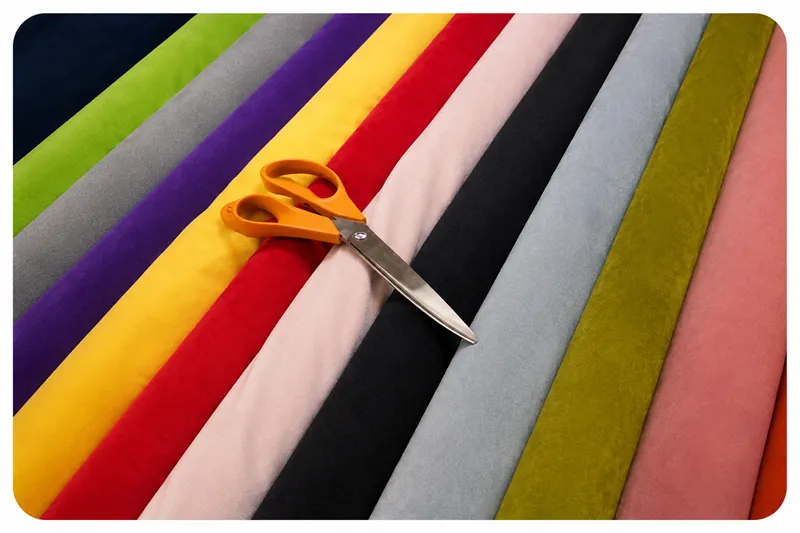
The approved product should confirm the major materials used in production. Depending on the slipper design, these may include:
- Plush fabric and inner lining
- Binding and decorative fabrics
- Foam or PP cotton
- EVA, TPR, rubber, or fabric outsole
- Embroidery thread
- Approved color and texture
Where pile length, texture, or color is important, the product sample may be supported by separately approved fabric or color references.
A material card, when stored under suitable controlled conditions, can also provide an additional reference for repeat production.
See our material inspection process →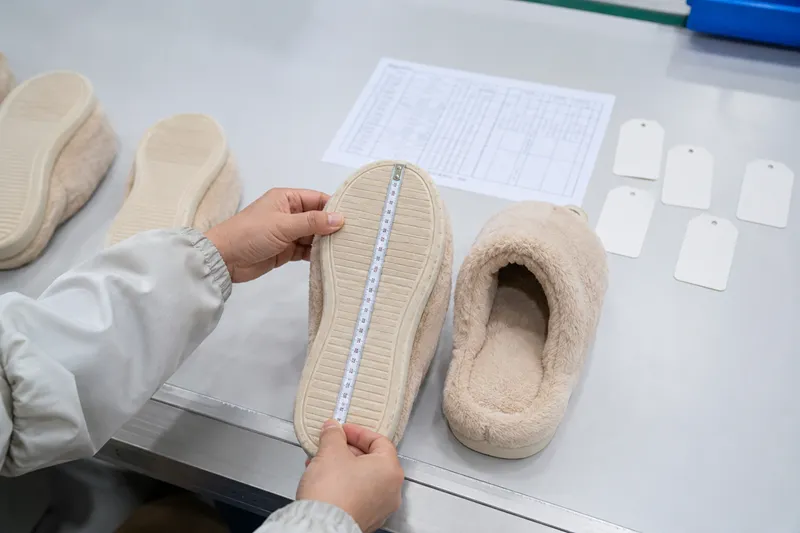
Measurements and Tolerances
Plush slippers are flexible textile products, so small dimensional variations can occur. The physical sample confirms the intended proportions, while the measurement chart defines measurable requirements.
- Overall and sole length
- Slipper width
- Opening width
- Upper height
- Logo or component position
- Agreed dimensional tolerances
For multi-size orders, one approved sample should not automatically be treated as the dimensional standard for every size. Additional grading or measurement specifications may be required.
See our plush slipper size measurement inspection →Construction and Stitching
The approved sample helps define how individual slipper components should be assembled.
- Seam location
- Stitch appearance
- Upper and lining construction
- Edge finishing
- Decorative stitching
- Attachment of ears, tails, or other plush parts
- Left and right symmetry
For animal character slippers, small differences in sewing position can noticeably change the final facial expression or overall shape.
Read about our stitching quality inspection →Logo and Branding
For private label and promotional slippers, the approved production information should clearly identify:
- Logo size
- Placement and orientation
- Embroidery thread or print color
- Artwork revision
- Woven, care, or size labels
When placement is important, measurable reference points are more reliable than subjective visual instructions.
“Move the embroidery slightly upward.”
“Position the bottom edge of the embroidery 25 mm above the center front seam.”
Cushioning and Outsole Requirements
Comfort and outsole construction cannot always be evaluated from appearance alone. These elements should be confirmed together with the relevant product specifications.
Cushioning and Filling
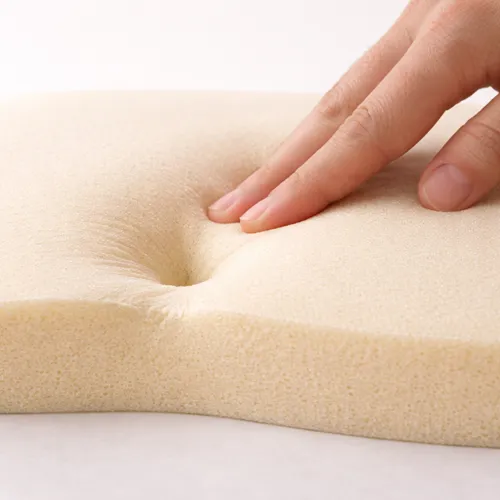
Depending on the construction, plush slippers may contain sponge, memory foam, EVA cushioning, PP cotton, or other padding materials.
- Material type
- Thickness
- Cushioning feel
- Product fullness
- Shape retention
- Insole construction
For three-dimensional animal slippers, filling quantity can also affect ears, heads, tails, and other character details.
Learn about memory foam plush slipper construction →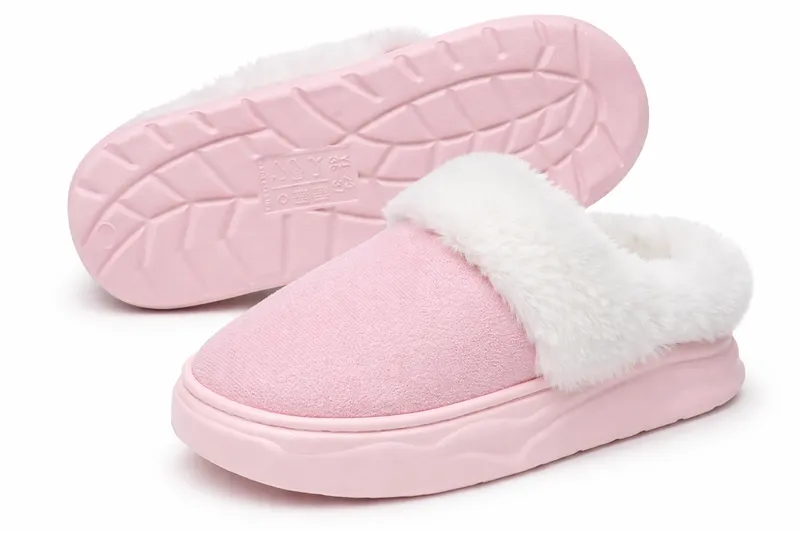
Outsole Construction
Outsole control is one of the areas that clearly distinguishes plush slipper manufacturing from plush toy production.
- Outsole material
- Thickness
- Color and shape
- Surface texture
- Tread pattern
- Upper-to-sole alignment
- Bonding or stitching construction
Where required, characteristics such as slip resistance, sole bonding, flexibility, or durability should be defined through separate inspection or testing requirements.
See our in-house anti-slip sole check →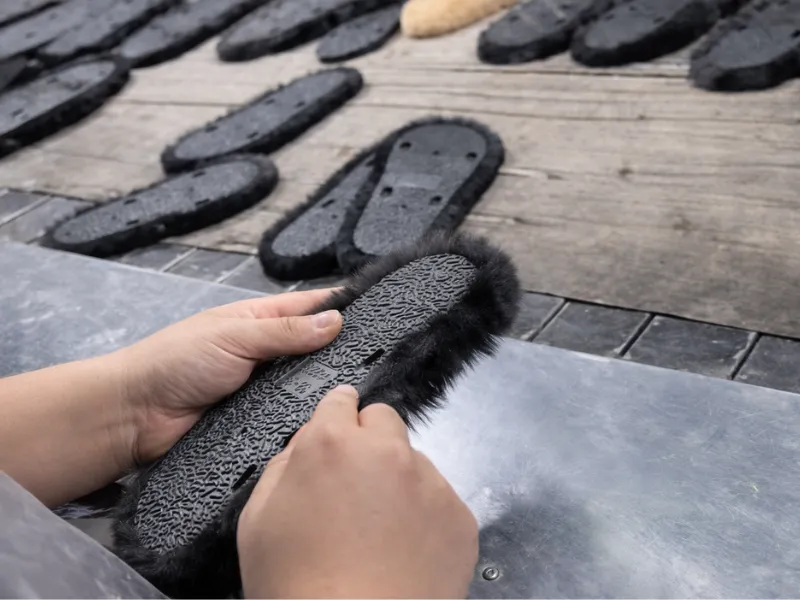
Surface Appearance and Finishing
The approved sample should represent the expected overall visual standard for the finished slipper.
- Overall shape
- Plush direction
- Left and right symmetry
- Surface cleanliness
- Loose threads
- Decorative details
- Character appearance
Minor variations can occur in soft materials and manual finishing. The objective is to maintain consistency within the agreed quality requirements rather than microscopic visual uniformity.
See plush surface finishing before packing →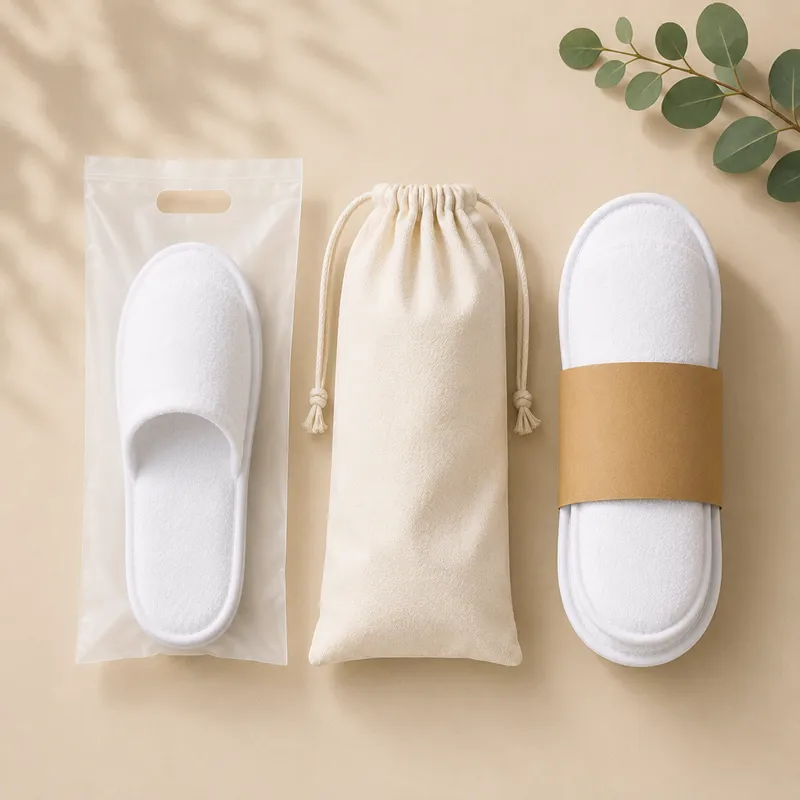
Labels and Packaging
Packaging specifications should be confirmed separately where necessary, especially for retail, hotel, private label, and promotional projects.
- Individual polybags
- Retail boxes
- Hangtags
- Barcode labels
- Size stickers
- Care labels
- Carton quantities
- Carton and shipping marks
Customized packaging artwork may be approved separately from the physical slipper sample, so final packing inspection should refer to the confirmed packaging specification.
See our packing and pre-shipment inspection →Approval should be specific, not just visual. The golden sample helps establish the expected product, while measurements, material references, artwork, packaging specifications, tolerances, and applicable test requirements make that approval repeatable during bulk production.
Changes, Repeat Orders and Sample Validity
Final approval does not mean a plush slipper can never be changed. However, once a golden sample has been designated as the production reference, later changes should be controlled carefully.
The same principle applies to repeat orders. A previously approved sample may remain useful, but its validity should be reconfirmed before the next production run begins.
What Happens If the Product Changes After Approval?
Changes may still be requested after sample approval. Depending on their scope, they may affect materials, production instructions, pricing, tooling, lead time, or inspection requirements.
Common changes include:
How Should the Revision Be Controlled?
Define exactly what has changed instead of relying only on informal messages or verbal instructions.
Revise the applicable drawing, measurement, artwork, material, or packaging information.
A significant material, construction, size, or appearance change may require a revised physical sample.
Production and inspection teams should use the updated approved version rather than the previous reference.
The main risk is not simply making a change—it is allowing different teams to work from different revisions. Buyer, merchandiser, production, and QC records should all point to the same approved version.
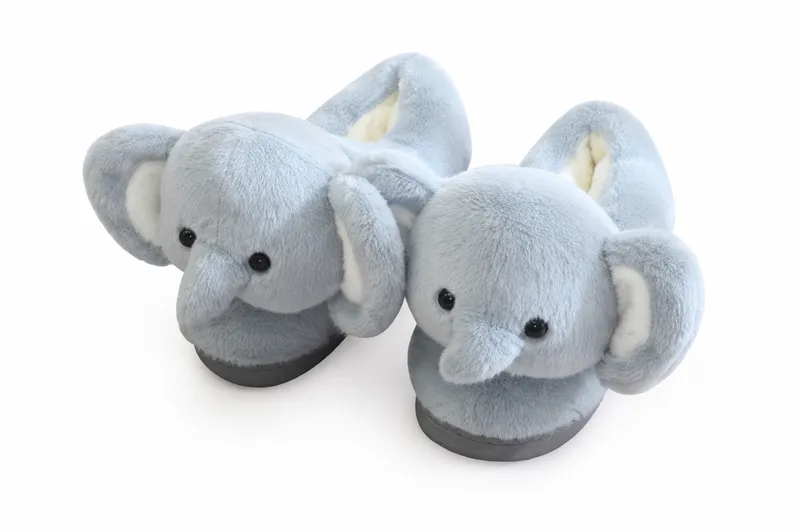
Can a Golden Sample Be Reused for Repeat Orders?
It may remain valid, but this should not be assumed automatically. Before a repeat order enters production, the previous sample and specification should be checked against the current production conditions.
When Key Conditions Are Unchanged
Plush fabrics and other major materials remain unchanged.
Relevant material suppliers remain the same where consistency depends on the supplier.
Construction and sewing methods have not changed.
Outsole tooling and construction remain unchanged.
Branding, artwork, and packaging requirements are still the same.
The retained reference remains in suitable condition.
When Production Conditions Have Changed
A new plush fabric, foam, filling, or outsole supplier is introduced.
A different outsole mold, tooling, or construction method is used.
Product dimensions, artwork, or decorative details have been revised.
The customer has changed packaging or labeling requirements.
A long period has passed since the previous production run.
The retained sample is no longer reliable as a visual or dimensional reference.
Why the Condition of a Retained Sample Matters
A physical sample can change during long-term storage. Its current appearance should therefore be considered together with the original approved specifications and material references.
Prolonged light exposure may change fabric or trim colors.
Foam, plush, or filling may remain compressed after storage.
Dust, moisture, or handling may alter the visible condition.
Long-term storage may affect shape or three-dimensional details.
For repeat orders, confirm the applicable revision before production starts. A previous golden sample can remain a useful reference, but changes in materials, suppliers, tooling, specifications, or the condition of the retained sample may require reconfirmation or a new approved sample.