Choosing between an EVA sole and a rubber sole isn't about finding the "better" material. It is about selecting the outsole that best fits your plush slipper's intended use.
While EVA is known for lightweight cushioning and rubber for durability, manufacturers consider many other factors, including slipper construction, product positioning, walking surfaces, and customer expectations.
In this guide, we'll compare both materials from a manufacturer's perspective and explain when EVA, rubber, or a hybrid outsole is the right choice for your project.
Quick Comparison
EVA Sole vs Rubber Sole for Plush Slippers
Both materials can work well, but they solve different product needs. This table provides a practical starting point before reviewing the complete slipper construction.
| Factor | EVA Sole | Rubber Sole | What It Means for Plush Slippers |
|---|---|---|---|
| Weight | Generally lighter | Generally heavier | EVA helps keep indoor and oversized plush slippers lightweight. |
| Cushioning | Usually softer | Usually firmer | EVA is often preferred when soft indoor comfort is the priority. |
| Abrasion Resistance | Moderate | Generally higher | Rubber is more suitable for rougher surfaces and frequent indoor-outdoor use. |
| Flexibility | Usually flexible | Depends on compound and thickness | Both materials should be checked on completed slipper samples. |
| Traction | Depends on formulation and tread | Often stronger | Material alone does not guarantee slip resistance. |
| Typical Use | Indoor slippers | Indoor-outdoor slippers | The intended environment is usually more important than the material name. |
| Overall Feel | Soft and lightweight | More substantial and firm | Different product positioning may require different outsole materials. |
This comparison is only a starting point. EVA density, rubber compound, outsole thickness, tread design, and the complete slipper structure can all change the final result.
EVA Sole
What Is an EVA Sole?
EVA, or ethylene-vinyl acetate, is a lightweight foam material widely used in slippers, sandals, and comfort footwear. Its cellular structure helps reduce weight while providing cushioning and flexibility.
For plush slippers, EVA is often selected because it helps keep the finished product soft, flexible, and easy to wear indoors.
This becomes especially important for animal, character, and novelty slippers with thick plush fabrics, foam filling, embroidery, or oversized decorative elements. A heavy outsole can make these styles feel unbalanced, while a lightweight EVA sole helps maintain a more natural walking experience.
Why Manufacturers Choose EVA
- Helps reduce the finished slipper weight
- Provides soft cushioning for indoor comfort
- Supports natural forefoot flexibility
- Can be molded into different shapes and tread patterns
- Works well for bulky plush and character uppers
- Offers a practical solution for many indoor slipper projects
What Buyers Should Check
Specifying “EVA outsole” is only the starting point. Two EVA soles may look similar but feel very different once assembled into finished slippers.
- EVA density
- Foam hardness
- Outsole thickness
- Compression after repeated use
- Forefoot flexibility
- Finished slipper weight
Before Choosing EVA
When Is EVA Not the Best Choice?
EVA delivers excellent comfort for many plush slippers, but it isn't the ideal solution for every project. Like any outsole material, its performance depends on how and where the finished slipper will be used.
Where EVA Performs Best
EVA is often the preferred choice when lightweight comfort and flexibility are the primary design goals, especially for hotel slippers and other indoor plush slipper collections.
- Bedroom slippers
- Animal and character slippers
- Gift and souvenir slippers
- Private-label indoor collections
When Another Sole May Be Better
For products exposed to heavier wear, manufacturers may recommend a different outsole construction.
- Frequent indoor-outdoor use
- Rough concrete or stone surfaces
- Higher abrasion resistance requirements
- Longer product lifespan expectations
- Premium slippers requiring a firmer feel
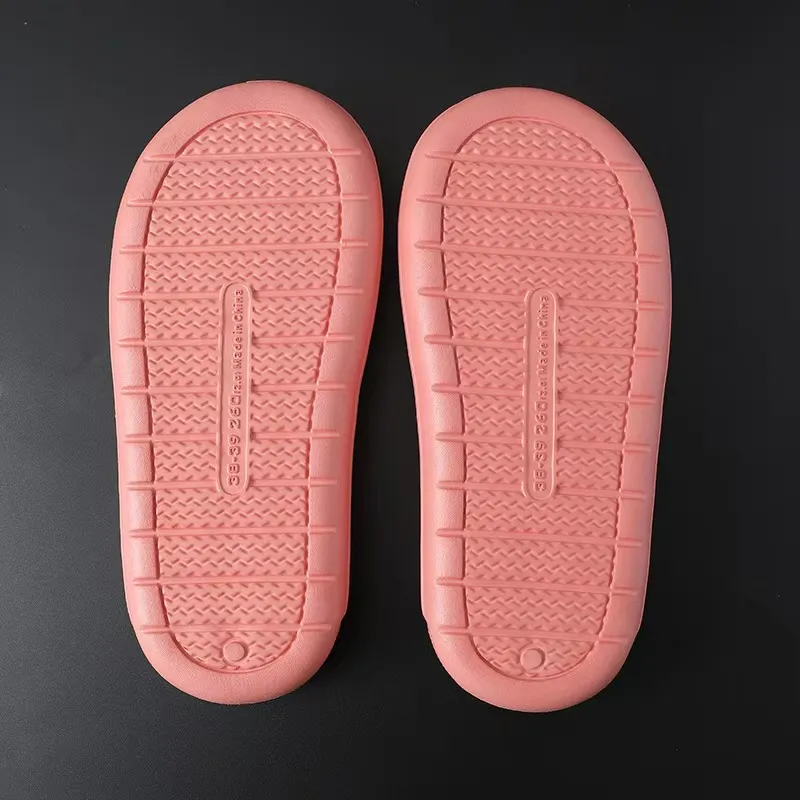
Why Manufacturers Choose Rubber
- Provides better abrasion resistance on rough surfaces
- Supports more demanding indoor-outdoor use
- Offers stronger traction in many applications
- Maintains shape well under repeated wear
- Creates a firmer and more substantial product feel
- Works well for premium and durability-focused collections
Rubber Sole
Rubber Sole: Best for Durability and Indoor-Outdoor Use
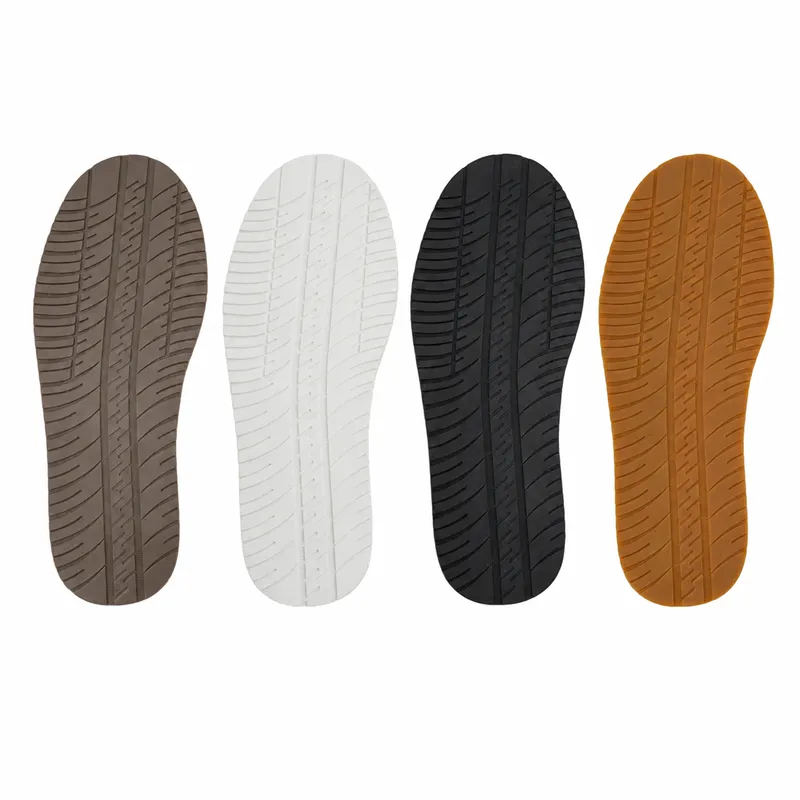
A rubber sole is made from natural rubber, synthetic rubber, or rubber-based compounds. Compared with EVA, rubber is usually selected when durability, abrasion resistance, and long-term wear become higher priorities.
For plush slippers, rubber is commonly considered for products that may be worn both indoors and outdoors, or styles expected to handle more demanding daily use.
However, rubber is not automatically the better choice. For lightweight bedroom slippers or oversized character styles, the added weight and firmness may provide little practical value.
From a manufacturer's perspective, rubber is recommended only when its durability supports the product's real use—not simply because it is stronger on paper.
“Rubber Sole” Is Not a Complete Specification
Different rubber compounds can produce very different results. When reviewing a rubber outsole, manufacturers evaluate more than the material name.
- Rubber compound
- Outsole hardness
- Flexibility
- Abrasion resistance
- Tread pattern
- Outsole thickness
- Finished slipper weight
- Target walking surface
Direct Comparison
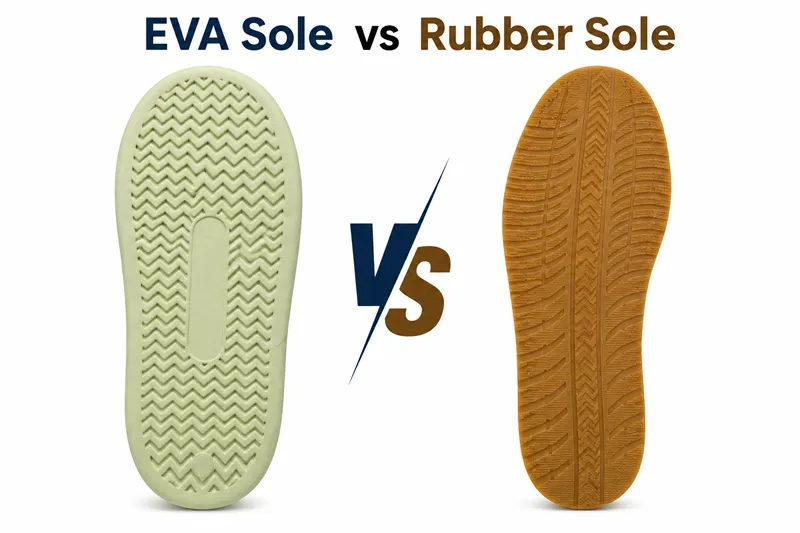
EVA Sole vs Rubber Sole: Which Should You Choose?
There is no universal winner between EVA and rubber. Each material solves a different product need, so the better choice depends on how the finished slipper is expected to perform.
Weight
EVA is generally lighter than rubber. This makes it especially suitable for indoor slippers, oversized animal styles, and other plush designs where a heavy outsole may affect balance and walking comfort. Rubber creates a more substantial feel but may add unnecessary weight to lightweight products.
Comfort
EVA usually offers a softer and more cushioned feel, but comfort does not depend on the outsole alone. The lining, foam padding, insole, thickness, and flexibility of the entire slipper also influence the final wearing experience.
Durability
Rubber generally provides better abrasion resistance on rough surfaces. However, maximum durability is not necessary for every product. Indoor slippers may gain little practical value from a heavier outsole designed for demanding outdoor use.
Traction
Rubber often provides stronger grip, but material alone does not guarantee slip resistance. Compound, hardness, tread pattern, contact area, floor surface, and outsole wear all affect real performance.
Product Positioning
EVA is commonly used for lightweight, comfort-focused indoor collections. Rubber is more suitable for durable or premium indoor-outdoor products. The outsole should support the product's retail positioning rather than work against it.
Manufacturing and Cost
EVA often provides a practical balance of comfort, molding flexibility, and production efficiency. Rubber may involve additional material, weight, and processing requirements, so its performance advantages should justify the added cost for the project.
Choose EVA
When lightweight indoor comfort, flexibility, and lower finished weight are the main priorities.
Choose Rubber
When abrasion resistance, durability, and more demanding indoor-outdoor use are more important.
Consider Hybrid
When the product needs EVA cushioning together with a more durable rubber ground-contact layer.
How We Choose the Right Sole for Each Project
One of the biggest differences between manufacturers and most online comparison articles is how the decision is made.
Many articles begin by comparing materials. We begin by understanding the product.
When developing custom plush slippers, we don't recommend an outsole based solely on whether it is made from EVA or rubber. Instead, we evaluate how the finished slipper will be used, who it is designed for, and what experience the customer expects.
Before recommending an outsole, we usually work through four key questions.
1. Where Will the Slippers Be Worn?
The intended use is always our starting point. A bedroom slipper, a hotel slipper, and an indoor-outdoor house slipper may look similar, but they require different outsole characteristics.
For products designed mainly for indoor use, lightweight comfort and flexibility are usually more important than maximum abrasion resistance. If the slippers are expected to be worn outdoors or on rough surfaces, durability becomes a higher priority.
2. What Is the Product Positioning?
The same slipper design may require completely different outsole constructions depending on how the product will be sold.
For example, hotel slippers usually prioritize comfort, lightweight construction, and cost efficiency. Premium retail collections may require a more substantial feel, while indoor-outdoor slippers focus more on durability and long-term performance.
Instead of recommending the same outsole for every project, we match the outsole to the product's positioning.
3. How Heavy Is the Upper?
Many buyers focus on the outsole but overlook the upper.
For plush slippers, thick fabrics, memory foam, embroidery, stuffed components, and oversized decorations all increase the weight of the upper. If a heavy rubber outsole is added, the finished slipper may feel unbalanced during walking.
A lightweight EVA outsole often provides a better balance for these products, improving overall comfort without changing the slipper's appearance.
4. Compare Finished Samples
Material specifications are only the starting point. Before approving mass production, we always compare finished slippers instead of judging the outsole material alone.
During sample evaluation, we typically assess the finished slipper's weight, flexibility, walking comfort, outsole grip, upper-to-sole attachment, and overall balance.
Small differences that seem insignificant on paper often become obvious once the slipper is worn. That's why sample evaluation remains one of the most important steps in outsole selection.
Manufacturers Choose Products, Not Materials
Many buyers ask us whether EVA or rubber is the better outsole material.
Our answer is usually another question:
How do you expect the finished slipper to perform?
Once we understand the intended use, target market, product positioning, and sample requirements, recommending the right outsole becomes much easier.
The best outsole isn't necessarily the lightest or the most durable. It's the one that creates the best balance of comfort, durability, weight, cost, and overall product performance.
Why More Brands Are Choosing Hybrid Soles
Many buyers compare EVA and rubber as if they must choose one or the other. In reality, many premium plush slippers combine both materials to achieve a better balance of comfort and durability.
A hybrid outsole typically uses EVA as the cushioning layer while adding rubber to the ground-contact areas where additional abrasion resistance and traction are needed. Instead of asking one material to do everything, each material performs the job it does best.
Why Hybrid Construction Works
For manufacturers, a hybrid outsole isn't about adding more materials—it's about improving the finished product. By combining the strengths of EVA and rubber, brands can often create slippers that feel lightweight indoors while offering better durability for occasional outdoor use.
- Lightweight cushioning from EVA
- Improved abrasion resistance from rubber
- Better traction on common walking surfaces
- A balanced combination of comfort and durability
- Suitable for premium private-label collections
Is a Hybrid Sole Always Better?
Not necessarily.
A hybrid outsole usually involves additional materials and manufacturing steps, making it unnecessary for many lightweight indoor slippers. For hotel slippers, bedroom slippers, or promotional products, a well-designed EVA outsole may already provide the ideal balance of comfort, weight, and cost.
Manufacturers recommend a hybrid construction only when its additional performance creates real value for the finished product.
Manufacturer's Insight: The goal isn't to use more materials—it's to use the right material in the right place. That's why many premium slippers don't choose between EVA and rubber. They combine both to achieve the performance customers actually need.
Final Recommendation
So, which outsole should you choose?
There isn't a single answer that fits every plush slipper. The right outsole depends on the product's intended use, target market, upper construction, and customer expectations—not simply on whether the material is EVA or rubber.
The table below provides a practical starting point for most OEM and private-label plush slipper projects.
| Product Type | Recommended Sole | Reason |
|---|---|---|
| Bedroom Plush Slippers | EVA | Lightweight, soft, and comfortable for indoor use. |
| Hotel & Spa Slippers | EVA | Comfort-focused while helping reduce overall product weight. |
| Character & Animal Slippers | EVA | Balances oversized plush uppers and improves walking comfort. |
| Gift & Souvenir Slippers | EVA | Comfortable, lightweight, and suitable for most indoor applications. |
| Premium Private-Label Collections | Hybrid | Combines EVA cushioning with improved durability. |
| Indoor-Outdoor House Slippers | Rubber or Hybrid | Better abrasion resistance for more demanding environments. |
The best outsole isn't the one made from the strongest material. It's the one that best matches the finished slipper.
If you're developing a custom plush slipper collection, our team can recommend the most suitable outsole based on your design, target market, and intended use—not just the material specification.
Contact us to discuss your project or request a sample recommendation.
Frequently Asked Questions
Is EVA better than rubber for plush slippers?
Not necessarily. EVA is generally preferred for lightweight indoor slippers because it offers soft cushioning and lower weight. Rubber is often chosen when better abrasion resistance and durability are required. The better choice depends on how the finished slipper will be used.
Are rubber soles more durable than EVA soles?
In most cases, yes. Rubber generally provides higher abrasion resistance on rough walking surfaces. However, extra durability is only valuable if it matches the slipper's intended application. For many indoor plush slippers, EVA already provides sufficient performance.
Which sole is more comfortable?
Comfort depends on the complete slipper rather than the outsole alone. While EVA usually feels softer, the upper material, foam padding, insole construction, outsole thickness, and flexibility all influence the final wearing experience.
Is a rubber sole more slip-resistant than an EVA sole?
Not always. Slip resistance depends on the outsole compound, tread pattern, hardness, contact area, floor surface, and wear condition. Material alone cannot determine the overall traction of a finished slipper.
Can one slipper combine both EVA and rubber?
Yes. Many premium plush slippers use a hybrid outsole that combines EVA cushioning with rubber contact areas. This construction can balance comfort, durability, and traction without making the slipper unnecessarily heavy.
Which outsole is best for hotel slippers?
For most hotel and spa slippers, EVA is commonly selected because it provides lightweight comfort while helping control the finished product weight and cost. The final recommendation still depends on the design, flooring environment, and buyer requirements.
How do manufacturers choose between EVA and rubber?
Manufacturers consider the intended use, product positioning, upper construction, walking surface, target weight, durability requirements, and finished sample performance. The goal is to recommend the outsole that best fits the completed product rather than selecting a material in isolation.
Can I customize the outsole for my plush slippers?
Yes. EVA and rubber outsoles can be customized with different colors, tread patterns, logo designs, thicknesses, shapes, and hardness options according to the slipper design and brand requirements.
Should I decide the outsole material before requesting samples?
Not necessarily. Buyers can provide an initial preference, but the final outsole decision is often easier after comparing completed samples. Finished samples allow you to evaluate comfort, weight, flexibility, grip, attachment quality, and overall balance before bulk production.