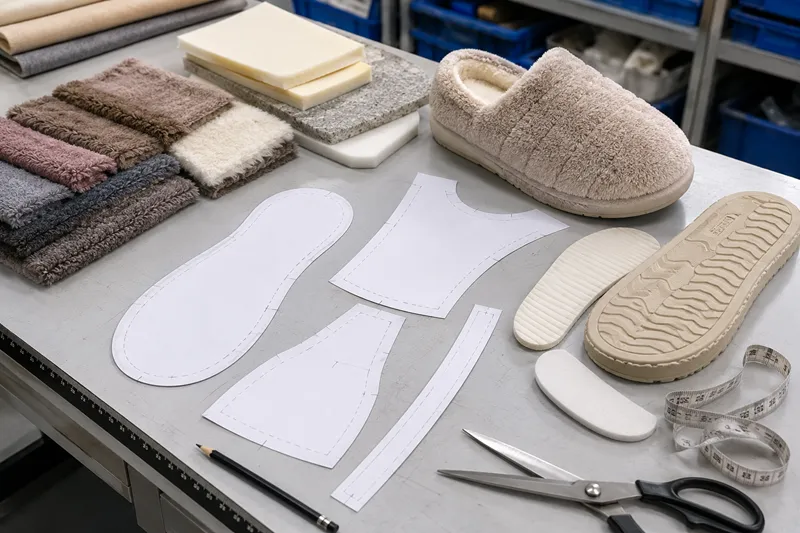
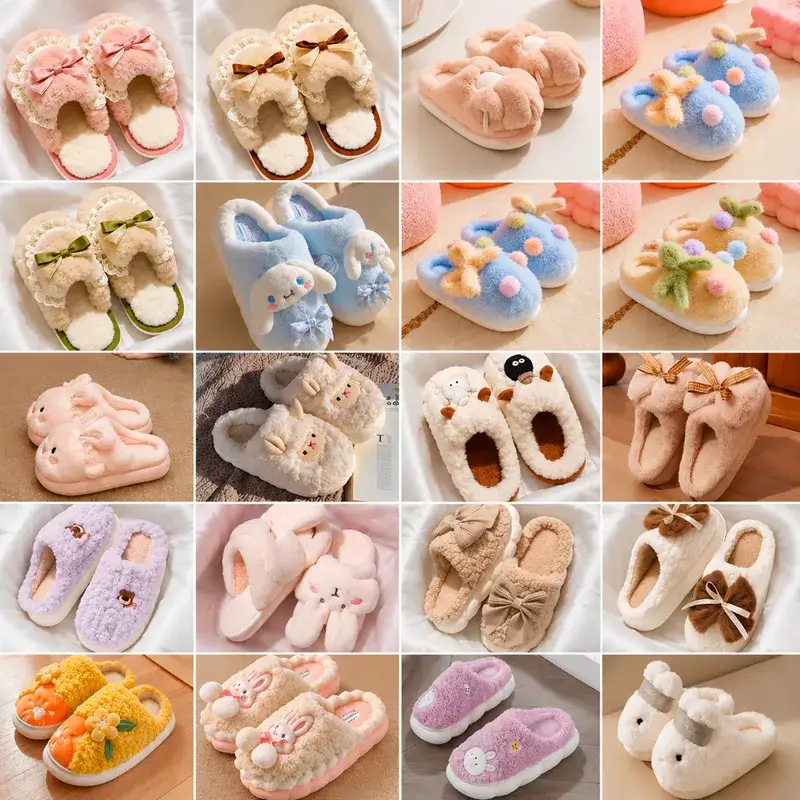
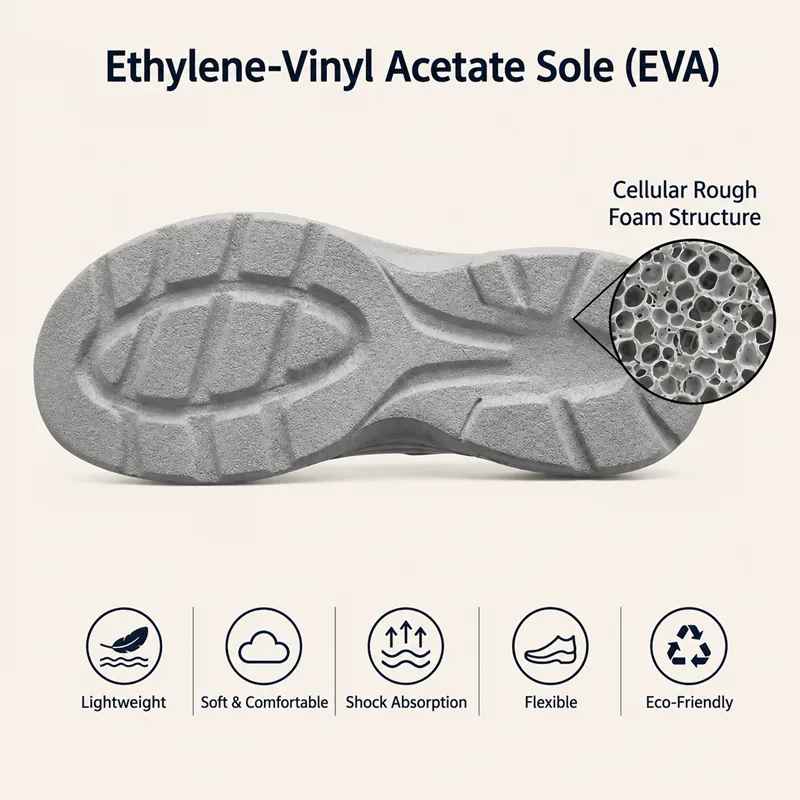
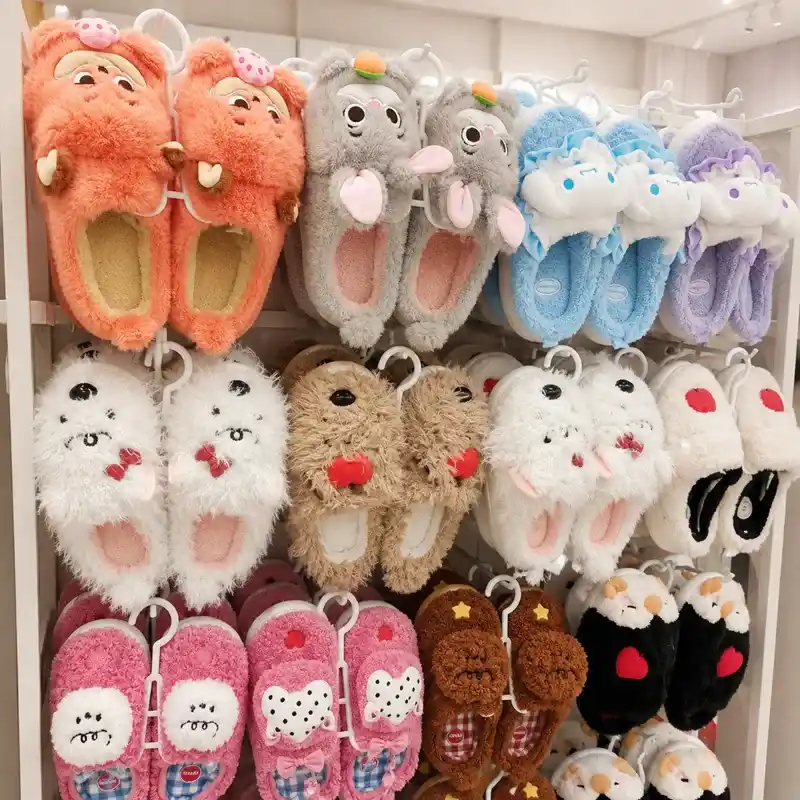
In custom plush slipper production, the sole is not only the bottom part of the product. It affects wearing stability, product appearance, and the overall quality of bulk orders.
For wholesalers, private label brands, hotel suppliers, gift companies, and retail sellers, common sole-related issues include edge lifting, loose soles, visible glue marks, outsole misalignment, and inconsistent slipper shape.
That is why a factory in-house sole attachment check is an important part of our quality control process before packing. This is a practical production inspection, not a laboratory certification test. It helps identify visible and functional issues during daily bulk production.
Why Sole Attachment Matters for Plush Slippers
Plush slippers are soft and comfortable, but the upper and sole still need to be firmly connected. If the sole is not attached properly, the slippers may look uneven, feel unstable when walking, or show early signs of separation after use.
For bulk custom slipper orders, these small details can affect customer satisfaction, product reviews, and repeat orders. A cute design is important, but stable construction is just as important for a reliable finished product.
What We Check During an In-House Sole Attachment Inspection
During production and before packing, workers check several key areas of the slipper. The goal is to reduce avoidable defects before the goods are shipped.
Sole Edge
Check whether the edge is flat, clean, and properly attached to the upper.
Bonding Line
Check whether there are open gaps, weak bonding areas, or early signs of separation.
Outsole Alignment
Check whether the sole is centered and matches the upper shape correctly.
Final Appearance
Check glue marks, dirty edges, shape consistency, and left-right balance.
1. Visual Check of the Sole Edge
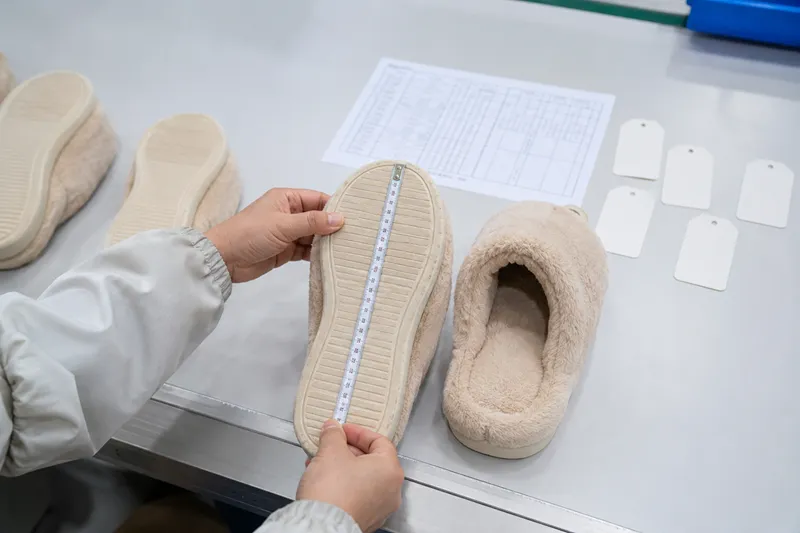
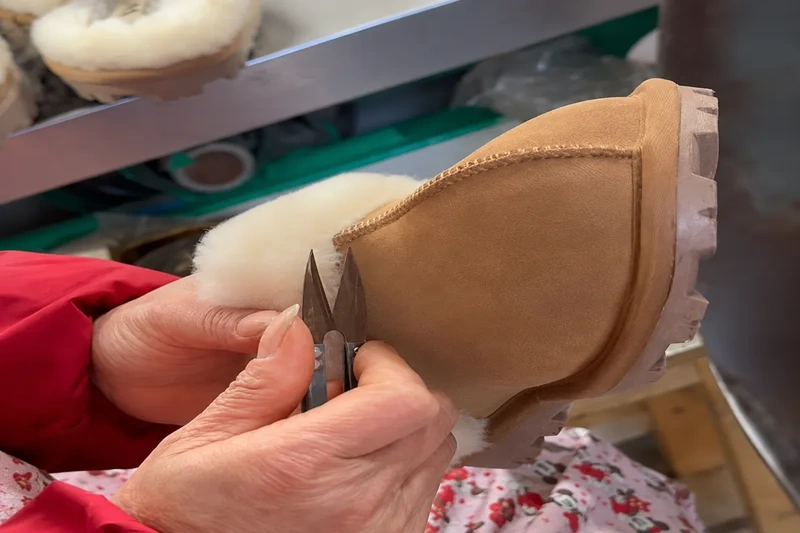
The first step is to visually check the area where the plush upper connects with the sole. Workers pay close attention to the toe, heel, and side areas because these positions are more likely to show edge lifting or small gaps.
During this step, workers check whether the sole edge is even, whether the outsole is attached in the correct position, and whether there are visible glue marks, dirty bonding areas, or uneven edges.
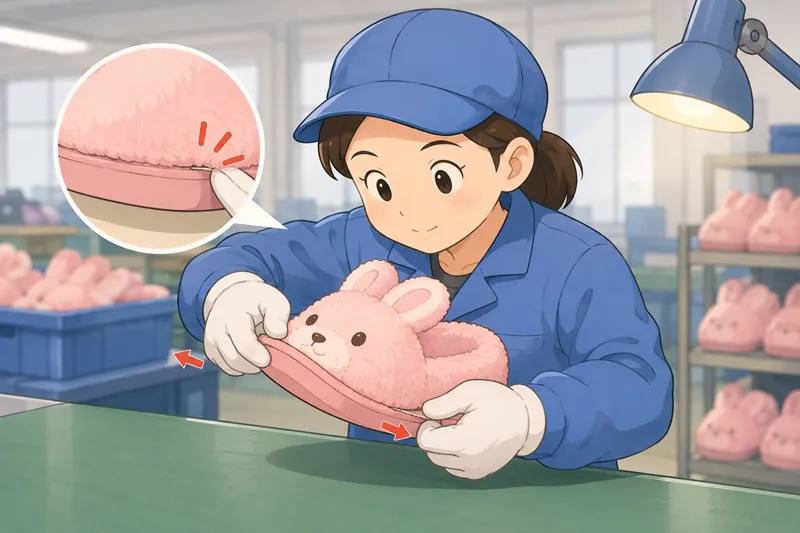
2. Manual Edge Pulling Check
After the visual inspection, workers may gently pull or press the sole edge by hand. This is not a violent tearing action. It is a careful factory check to observe whether the upper and the sole are connected securely.
For glued soles, the focus is on whether the bonding line is firm and stable. For stitched or bound-edge slippers, workers check whether the stitching, edge finishing, and connection area are secure.
3. Forefoot Flexing Check
When people walk, the front part of the slipper bends repeatedly. Because of this, the forefoot area is an important place to check.
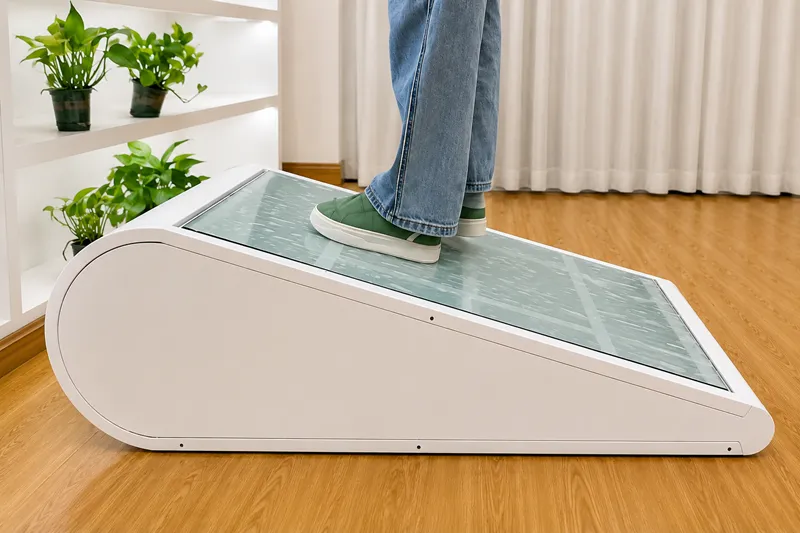
Workers may gently bend the front part of the slipper and observe whether the sole edge lifts, whether the bonding area opens, or whether the slipper shape becomes deformed after flexing.
This step helps us understand whether the slipper remains stable during normal indoor use, not just when it is placed on a worktable.
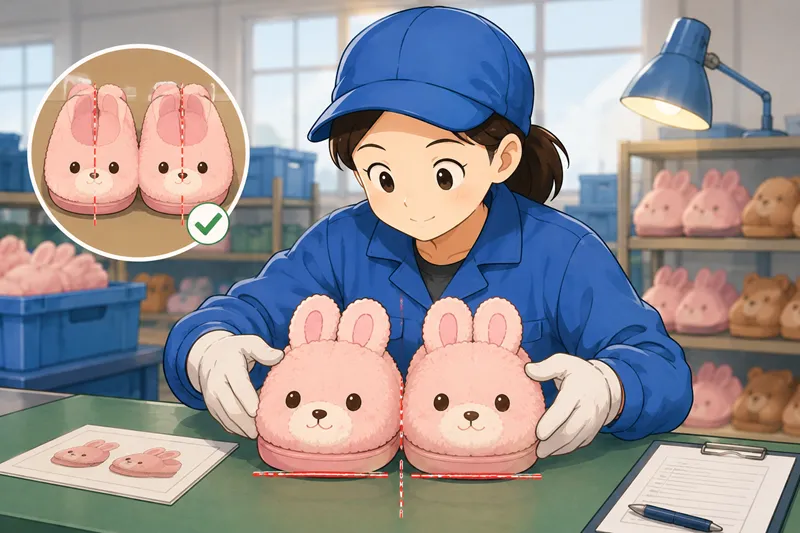
4. Sole Alignment and Shape Check
If the sole is attached off-center, the whole slipper may look unbalanced. It may also affect wearing stability.
Workers check whether the sole is centered, whether the left and right slippers are balanced, whether the sole edges are even, and whether the finished shape is close to the approved sample.
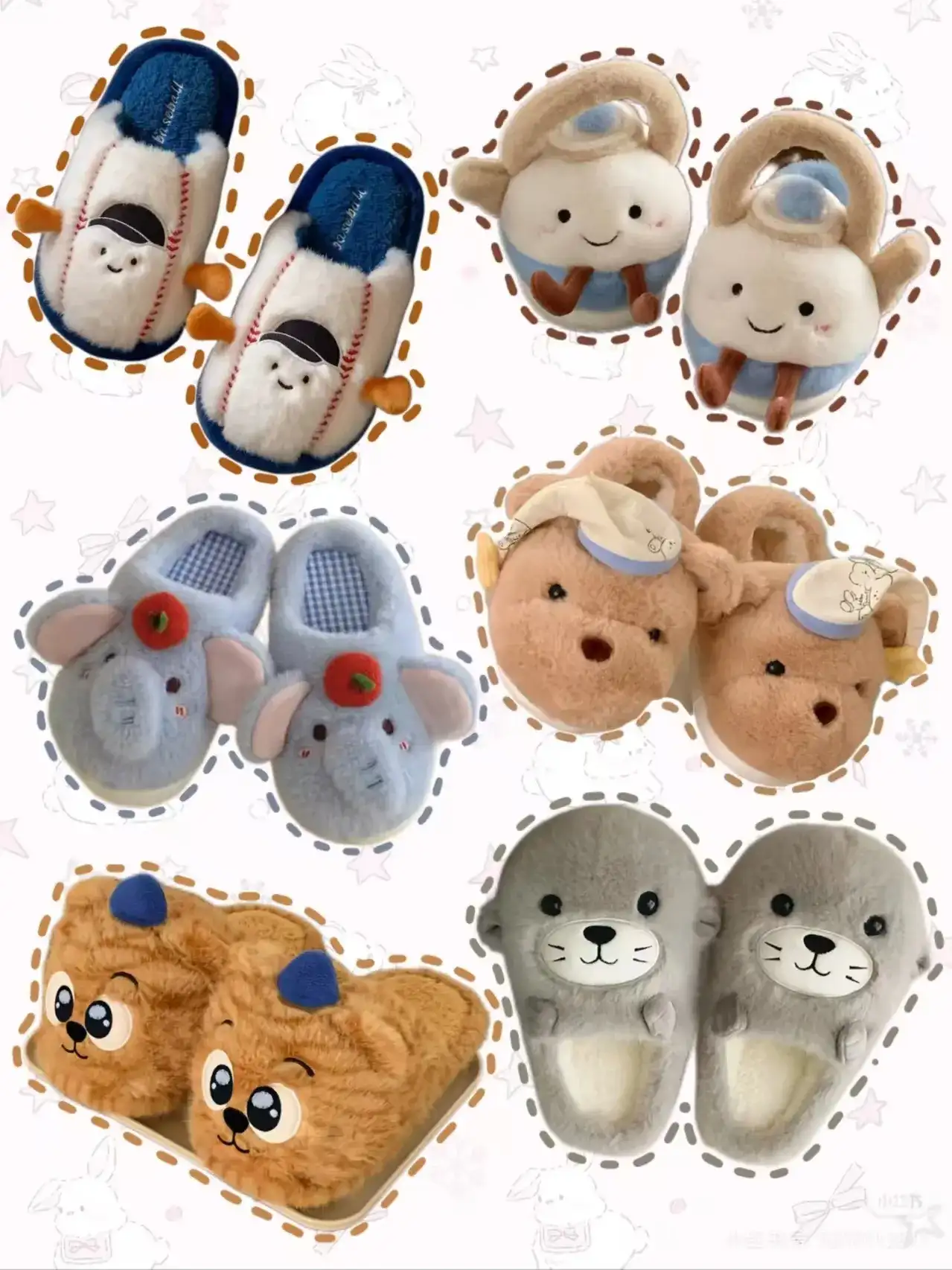
This is especially important for animal plush slippers, cartoon slippers, and private label retail products because visual symmetry directly affects the final selling quality.
5. Glue Mark and Finishing Check
For glued sole construction, workers also check whether there are visible glue marks, glue overflow, dirty edges, or rough bonding areas.
Some glue marks may not affect wearing performance, but they can affect the finished appearance. This is especially important for light-colored plush slippers, gift slippers, hotel slippers, and retail packaging projects.
In-House Check vs. Laboratory Testing
A factory in-house sole attachment check is used for daily production quality control. It helps identify visible issues such as loose soles, edge lifting, outsole misalignment, glue marks, and shape inconsistency before packing.
Laboratory testing is different. It usually requires professional equipment, standard test methods, and measurable results. If buyers need formal data for sole bonding strength, flexing resistance, abrasion resistance, or slip resistance, third-party testing can be arranged based on the target market and order requirements.
Why This Matters for Bulk Plush Slipper Buyers
For bulk custom plush slipper orders, buyers need more than a good-looking sample. They also need stable construction, clean finishing, consistent shape, and reliable packing.
Factory in-house sole attachment checks help reduce common problems such as loose soles, edge lifting, glue marks, outsole misalignment, and unstable wearing experience.
These checks are useful for wholesale distributors, private label brands, Amazon sellers, retail stores, hotel and spa buyers, gift suppliers, and promotional product companies.
Our Approach to Plush Slipper Quality Control
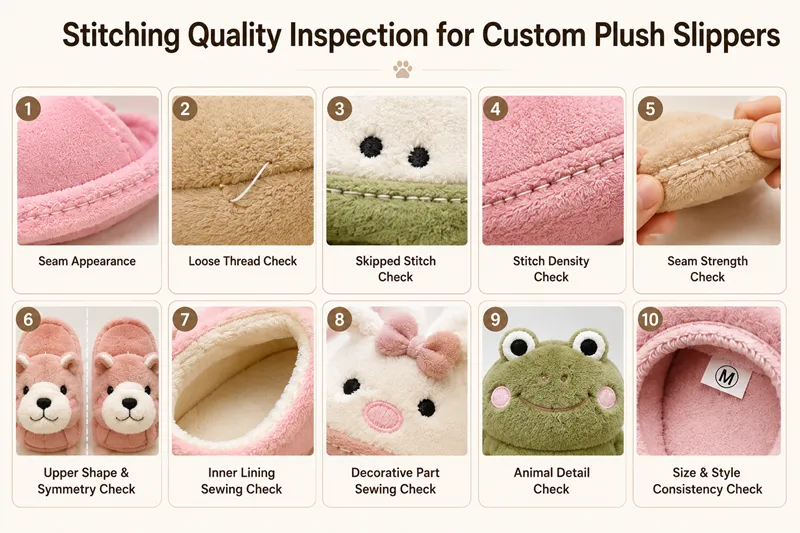
At CustomPlushSlippers, we focus on practical quality control for bulk custom plush slipper production. From material checking and stitching inspection to sole attachment, final cleaning, air blowing, packing inspection, and pre-shipment checks, each step helps reduce avoidable defects before shipment.
Sole attachment is only one part of the full quality control process, but it is an important one. A stable sole helps the slipper feel better, look cleaner, and perform more reliably in daily indoor use.
Need Help Choosing the Right Sole for Your Plush Slipper Project?
Tell us your design idea, target price range, sole preference, packaging method, and intended market. Our team can recommend suitable materials and sole options for your custom plush slipper order.
Contact Us