Embroidery and printing are two of the most popular decoration methods for custom plush slippers. Each offers different advantages depending on the artwork, plush fabric, and slipper construction. Choosing the right method early in product development helps achieve better appearance, comfort, and production consistency.
This guide explains when each method performs best, how manufacturers evaluate different designs before sampling, and why many custom projects combine multiple decoration techniques. If you're specifically looking for embroidered branding, you may also be interested in our Custom Plush Slippers with Embroidery Logos guide.
Embroidery vs Printing: Quick Comparison
The table below summarizes the key differences between embroidery and printing for custom plush slippers. While both methods can produce excellent results, each is better suited to different artwork, fabrics, and production requirements.
| Factor | Embroidery | Printing |
|---|---|---|
| Best For | Logos, lettering, bold outlines, facial details | Gradients, illustrations, large graphics, repeating patterns |
| Visual Effect | Raised thread texture with a premium handcrafted appearance | Flat surface capable of reproducing complex colors and fine graphics |
| Artwork Complexity | Best for simple shapes and solid-color designs | Ideal for detailed artwork, shading, and full-color graphics |
| Large Graphic Areas | May become heavy, stiff, and more expensive | Usually a more practical solution |
| Short-Pile Plush | Excellent compatibility | Excellent compatibility |
| Long-Pile Plush | Fine details may be hidden by surrounding fibers | Edges and small details may become blurred |
| Surface Softness | Dense embroidery may reduce flexibility | Depends on the printing process and material |
| Typical Cost Drivers | Stitch count, embroidery area, machine time | Printing method, setup cost, print area, fabric, quantity |
| Typical Applications | Brand logos, premium collections, mascots, embroidered details | Photo artwork, colorful characters, promotional designs, all-over graphics |
What Are Embroidery and Printing?
Although both methods are used to decorate custom plush slippers, they work in completely different ways and are suited to different types of artwork.
Embroidery
Embroidery creates a design by stitching colored threads directly onto the slipper upper. The raised thread texture gives logos and character details a premium appearance while providing excellent durability when properly developed.
- Ideal for logos, lettering and bold outlines
- Creates a textured, premium finish
- Works well on most short-pile plush fabrics
- Not suitable for gradients or photographic artwork
- Large embroidery areas may reduce softness
Printing
Printing applies artwork using ink or transfer technology instead of thread. It can reproduce complex graphics, gradients and full-color illustrations that are difficult to achieve with embroidery.
- Ideal for gradients and detailed illustrations
- Suitable for large graphic areas
- Produces a flat visual appearance
- Performance depends on the fabric and printing method
- May not reproduce fine details clearly on long-pile plush
How Manufacturers Choose Between Embroidery and Printing
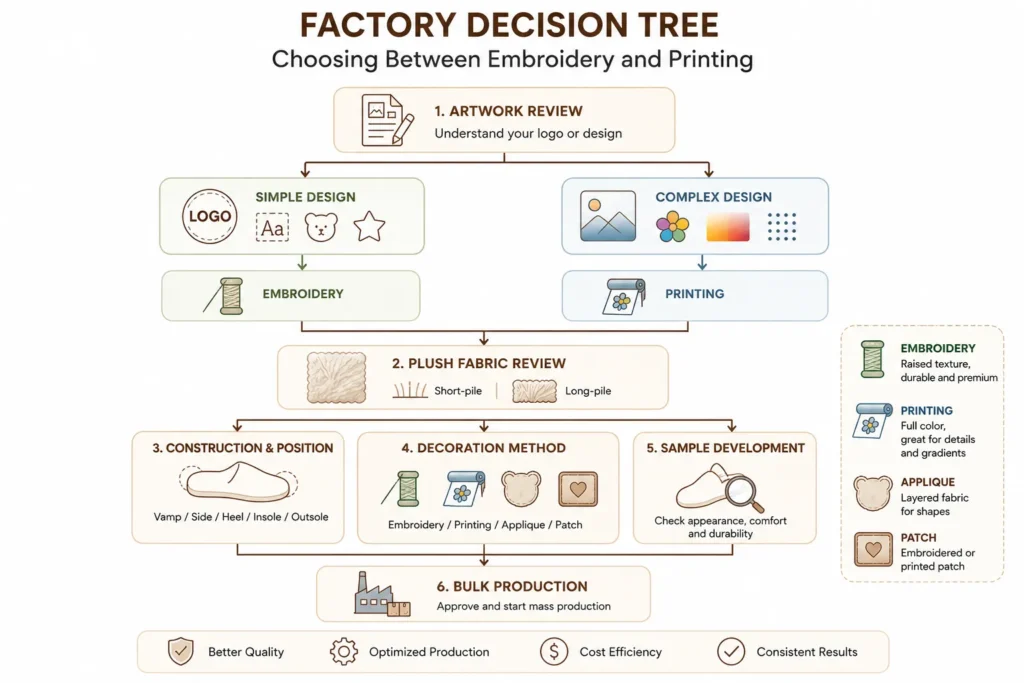
Professional custom slipper manufacturers rarely choose a decoration method based on appearance alone. Instead, they evaluate the artwork through a step-by-step review before sampling begins.
Review the Plush Fabric
The first step is to evaluate the plush material. Pile length, surface texture, fabric composition, and stretch all affect whether embroidery or printing can reproduce the design clearly and consistently.
Analyze the Artwork
Manufacturers separate the artwork into logos, text, outlines, gradients, large color blocks, and three-dimensional features. Different parts of the same design often require different decoration methods.
Check the Decoration Position
The decoration location affects durability and appearance. A logo on the vamp, heel, insole, or outsole may require different production methods because each area bends and wears differently.
Approve the Finished Sample
The final decision should never be based only on a flat fabric swatch. Manufacturers evaluate the completed slipper to confirm artwork clarity, comfort, alignment, and production consistency before bulk manufacturing.
Why Manufacturers Follow This Process
Professional manufacturers evaluate every custom slipper design before recommending embroidery, printing, or a combination of decoration methods. This review helps reduce sampling revisions and improves production consistency.
Start with the Artwork
Every project begins with the design itself. Logos, text, gradients, and character illustrations are reviewed separately because each type of artwork requires different production techniques.
Evaluate the Plush Material
The same artwork may produce completely different results on short-pile plush, Sherpa fleece, or long-pile faux fur. Material selection often determines whether embroidery or printing is the better option.
Review the Slipper Construction
Decoration placement, seam locations, foam thickness, and upper construction all affect how the finished artwork looks and feels after assembly.
Confirm with a Physical Sample
A flat fabric swatch cannot show the final appearance of a slipper. Manufacturers verify the completed sample to check alignment, comfort, durability, and overall production feasibility before bulk manufacturing.
Choosing the Right Decoration Method for Different Artwork Elements
Manufacturers rarely treat a complex slipper design as one single graphic. Instead, each artwork element is reviewed separately so the most suitable decoration method can be selected for appearance, softness and production consistency.
Embroidery
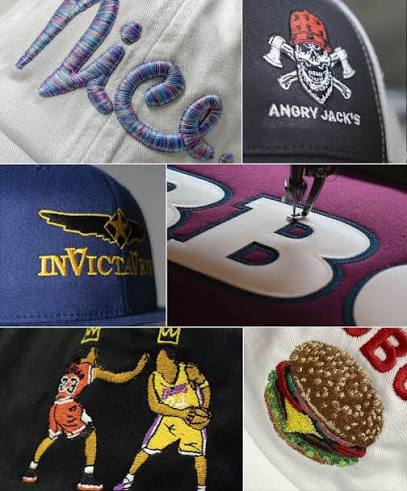
Simple Logos, Text and Bold OutlinesEmbroidery is ideal for clean logos, lettering, character facial details and bold outlines. The stitched surface creates a raised tactile effect and can give the finished slipper a more premium appearance. It performs best when the design uses clear shapes, sufficient spacing and solid colors.
Printing
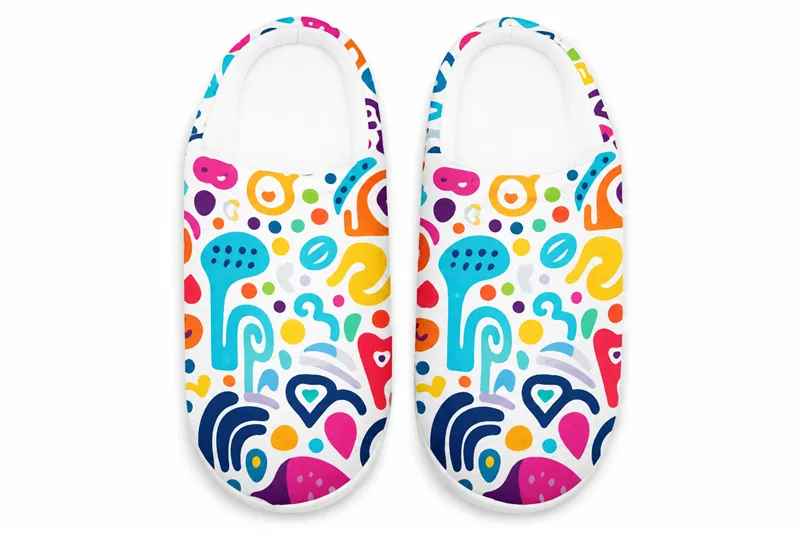
Gradients, Illustrations and Full-Color GraphicsPrinting is generally better for artwork containing gradients, shading, multiple colors, repeating patterns or detailed illustrations. These effects require smooth color transitions that cannot usually be reproduced accurately with embroidery thread alone. The final result still depends on the selected fabric and printing process.
Fabric Applique
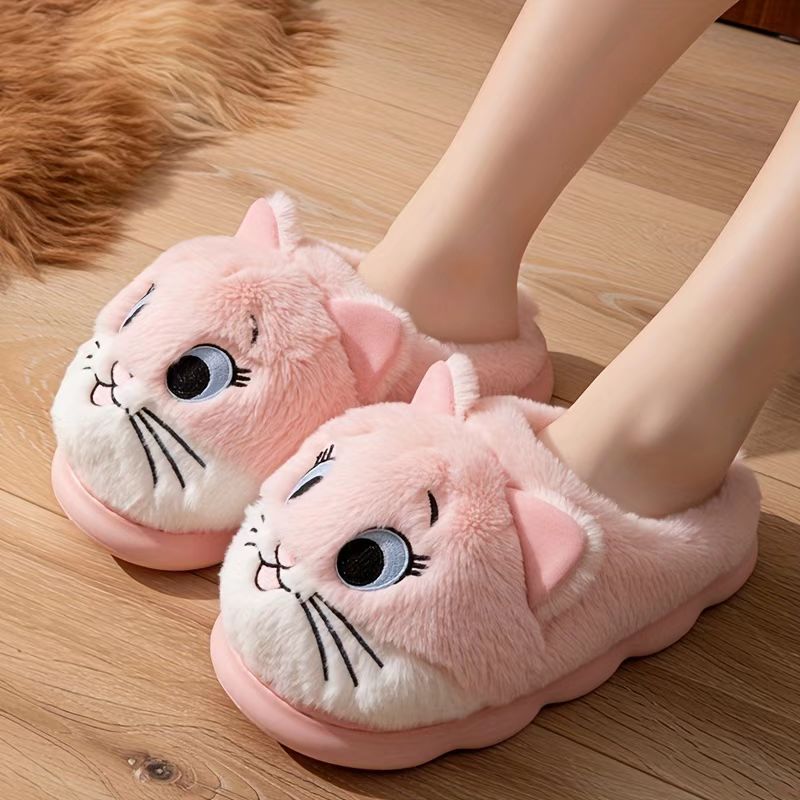
Large Solid Shapes and Layered Character PanelsLarge character faces, animal bodies and other solid-color sections are often better created with fabric applique rather than dense embroidery. A separate fabric panel forms the main shape, while smaller features such as the eyes, nose, mouth and whiskers can be added with embroidery. This reduces stitch density and helps the slipper remain soft and flexible.
3D Plush Components
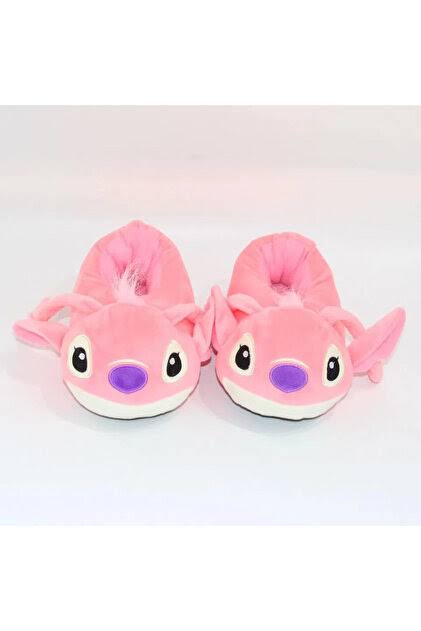
Raised Ears, Noses, Horns, Tails and Character FeaturesFlat decoration methods cannot reproduce raised features such as ears, noses, horns, wings, tails or stuffed facial structures. These elements are individually patterned, sewn, lightly filled and attached during assembly. They add depth and expression to mascot, animal and novelty slipper designs.
Factory note: Complex custom plush slippers often combine several of these techniques. The objective is not to force the entire artwork into one process, but to match each design element with the method that delivers the best appearance, comfort and manufacturing consistency.
How Decoration Position Changes the Best Method
The same logo may require a different decoration method depending on where it appears on the slipper. Curvature, seams, foot contact, bending and friction all affect the final appearance and durability.
Vamp Decoration
The vamp is the most visible area for logos and character artwork, but it also bends during walking. Small embroidery and printed fabric panels can work well, while large dense embroidery or thick transfers may make the upper stiff or cause distortion.
Common optionsHeel Branding
Heel panels are suitable for small brand names, woven labels and simple embroidered logos. The artwork must be positioned carefully because the center seam and curved shape can shift the logo after sewing.
Common optionsInsole Logo
The insole is relatively flat, making it suitable for printed logos, size information and multicolor graphics. Embroidery is generally avoided because stitches and backing may create an uncomfortable raised surface under the foot.
Common optionsSidewall and Outsole Branding
When long-pile plush makes direct decoration unclear, branding can be moved to a woven side label, rubber badge or molded outsole. These solutions keep the logo visible without affecting the softness of the upper.
Common optionsFactory note: A decoration that looks correct on a flat fabric panel may stretch, curve or move closer to a seam after the upper is assembled. Final placement should always be approved on a complete slipper sample.
Common Printing Methods for Plush Slippers
Printing is not a single manufacturing process. Different printing technologies are suitable for different fabrics, artwork styles, production quantities, and durability requirements. Manufacturers choose the printing method according to the specific project rather than simply deciding to "print" the design.
| Printing Method | Best For | Limitations |
|---|---|---|
| Screen Printing | Simple logos, solid colors, large production runs, and straightforward graphics. | Limited color transitions and not suitable for highly detailed illustrations or photographic artwork. |
| Heat Transfer Printing | Small production runs, multicolor graphics, promotional products, and custom artwork. | Repeated bending or improper application may reduce durability depending on the transfer material. |
| Sublimation Printing | Polyester fabrics, full-color graphics, gradients, and detailed illustrations. | Not suitable for most dark-colored plush fabrics and requires compatible polyester materials. |
| Direct Textile Printing | Complex illustrations, short production runs, and artwork requiring high color accuracy. | Printing quality depends on fabric compatibility, pretreatment, ink system, and curing process. |
Factory Tip: Manufacturers rarely choose a printing process based on artwork alone. Fabric composition, pile length, order quantity, expected durability, and production cost all influence whether screen printing, heat transfer, sublimation, or direct textile printing is the most suitable solution. In many custom projects, printing is also combined with embroidery, applique, or 3D plush components to achieve the best overall result.
Can Embroidery and Printing Be Used Together?
Absolutely. In professional slipper development, manufacturers rarely rely on a single decoration method. Combining multiple techniques often produces better appearance, comfort, and manufacturability than using embroidery or printing alone.
Why Hybrid Decoration Is Common
Different parts of the same artwork have different manufacturing requirements. Instead of forcing the entire design into one process, manufacturers select the most suitable decoration method for each individual element.
- Embroidery creates premium logos and facial details.
- Printing reproduces gradients and full-color illustrations.
- Applique reduces stitch density on large fabric panels.
- 3D plush components create ears, tails, horns and other raised features.
- The final slipper looks more realistic while remaining soft and comfortable.
Typical Combination
Fabric Applique
Embroidery
Printing
3D Plush Components
Factory recommendation: For mascot slippers, licensed characters, promotional products and novelty designs, a combination of decoration methods usually delivers the highest visual quality while keeping production practical.
Sample Approval Checklist Before Mass Production
Before bulk production begins, manufacturers should evaluate the completed slipper rather than relying only on artwork or a flat fabric swatch. If you'd like to learn more about the development process, see our Sample Development guide.
Artwork Accuracy
Confirm that logos, text, gradients and character details match the approved artwork and are reproduced clearly on the finished slipper.
Decoration Position
Check that embroidery, printing and other decorative elements are correctly aligned and positioned away from seams or areas that may distort the design.
Comfort & Flexibility
Ensure embroidery, applique or other decorative techniques do not make the upper excessively stiff or uncomfortable during normal wear.
Left & Right Consistency
Verify that both slippers have consistent colors, placement, proportions and overall appearance before approving production.
Construction Quality
Inspect stitching, edge finishing, glue lines and attachment of any 3D plush components to ensure reliable assembly.
Packaging & Labeling
Confirm woven labels, hang tags, barcodes and retail packaging before the production order is released.
Factory Tip: Never approve production based only on a digital mockup or a flat fabric sample. Always evaluate a fully assembled slipper to verify decoration quality, comfort, symmetry and overall appearance before mass production.
Embroidery vs Printing for Plush Slippers: Which Decoration Method Should You Choose?
There is no universal winner between embroidery and printing. The best decoration method depends on the artwork, plush fabric, decoration position and the overall product design. In many custom projects, manufacturers combine several techniques to achieve the best result.
| If Your Design Includes... | Recommended Method | Reason |
|---|---|---|
| Simple logos and brand names | Embroidery | Creates a premium stitched appearance with excellent durability. |
| Small facial details | Embroidery | Provides clear outlines and dimensional details. |
| Gradients and illustrations | Printing | Produces smooth color transitions that embroidery cannot reproduce. |
| Large solid-color areas | Fabric Applique | Maintains softness while reducing excessive stitch density. |
| Ears, tails, wings and raised features | 3D Plush Components | Creates depth and realistic character details. |
| Complex mascot characters | Combination of Multiple Methods | Combines the strengths of embroidery, printing, applique and 3D construction. |
Final Recommendation
Professional manufacturers rarely ask whether embroidery or printing is better. Instead, they evaluate the artwork, fabric, construction and production process before selecting the most suitable decoration method for each design element. For many custom plush slippers, combining embroidery, printing, fabric applique and 3D plush components delivers the best balance between appearance, comfort, durability and manufacturing efficiency.